
Select a Category

Therapy

Going For It! Using Acceptance and Commitment Therapy Techniques to Find Direction

Part Two

As discussed back in Part One of this post, this is where we will Go For It!

Imagine your life is like a car moving along a road. The roads in question are your values. We all have our preferences for the kind of scenery we want to see as we are driving. Some views are not for us, while others are just perfect. In order to follow the roads we want to (our values), we need to have the correct directions and a key to start the engine. These next steps will help you to program in your directions and turn the key.

First we must choose a road to follow. Use your values! Which of your values do you not feel you are living by currently? Which values do you wish were more present in your day-to-day life? Name these values and keep them in mind.

Next we need to set our directions. Set SMART goals that help us to live by our values. 

S – Specific actions you will take. Be as specific as possible

M – Meaningful. Actions should be guided by your values

A – Adaptive. This goal should help improve your fulfilment and quality of life

R – Realistic. This goal should be actually achievable given the context of your situation (resources, health, ability, etc…)

T – Time-framed. Set a specific time frame to help you follow through with your goal. Name a specific date and time or range when you will commit to these actions. Make sure this time is available and accurate.

Now that you have set your SMART goals, you have your directions. You know where you want to go and how to get there. All you need now is the KEY! And the key is doing it. Really try your best to go for it and follow through on your plans. Take small steps and plan for things that might get in the way of engaging in these goals. There is no shame in starting small and gaining momentum. You know yourself best; see if you can think of what might stop you from engaging in these actions. What can you do to prevent these barriers and follow through? Take note of your victories and successes (no matter how small). Once you finish one goal, set another! Try other values and domains of your life that are important to you. See how far you can take it. You are behind the wheel! The engine is on, the directions are telling you where to go, and the view is beautiful outside!

Final notes and remarks:

This is not a cure-all. While finding our values and trying to live by them can give us direction, our problems are complex and require complex solutions. It is helpful to work with someone to help you navigate this journey. I recommend seeking out a counselor, therapist, or psychiatrist to help explore your thoughts, feelings, behaviors, and the things that are keeping you stuck. There’s a lot more to healing than just finding direction and going for it. 

Although I use and appreciate the terms and techniques mentioned in this blog post, they are not my ideas. This blog post represents a short summary of works from other brilliant psychologists like Steven Hayes and Russ Harris. I highly recommend looking into their work on your own time to gain a further sense of these concepts and more!

Last, but certainly not least… Be kind to yourself. This is really hard work and I do not want to let that acknowledgement go unnoticed. Committing to healing, in whatever form that may be, is a massive step and even just reading this and wanting to make a change is an important accomplishment. There will be ups and downs throughout this journey, but regardless of how you may be feeling, I ask that you try to be kind to yourself for what you have been through and where you are going. 

References

Harris, R. (2019). ACT made simple: An easy-to-read primer on acceptance and commitment therapy (2nd ed.). New Harbinger Publications.

Hayes, S. C., Strosahl, K., & Wilson, K. G. (1999). Acceptance and Commitment Therapy: An experiential approach to behavior change. New York: Guilford Press.

Think2Perform. (2025). Values Cards Exercise. Think2perform. https://www.think2perform.com/values/
Finding Direction: Using Acceptance and Commitment Therapy Techniques to Find Direction

Many people come to therapy looking for direction. Whether it’s wanting to navigate an issue, finding identity, processing pain, or just wanting to feel better, we all want to find answers for the things that are troubling us. The difficult part is that there is no set path to follow, no manual that gives us step-by-step directions, no easy fix or cure-all. Every person is unique which means that our problems are also unique. To this point, our problems require individual approaches. What works for your partner, friend, or colleague might not work for you (and vice versa). 

While this may be true, it doesn’t make the struggles in our lives any less real. So what do we do with this? 

Finding Direction

Oftentimes, when we are struggling, we become lost. We are overwhelmed by the pain, confusion, or difficulty of our current situation and come to lose sight of how we want to live our lives. This is where our values become incredibly important… They give our life meaning, helping us to live a more gratifying and fulfilling life, even through the worst storms.

Now…you might have heard about values before in school or work and are wondering “how can values help me figure out my problem?” In Hayes’ Acceptance and Commitment Therapy (also known as ACT) values are not just morals or goals, they are leading principles that guide and motivate us as we move through life. They are statements about what we stand for, what we want to be doing in life, and how we want to behave. The idea is to make conscious choices to live BY our values as much as we can! Put more simply… “is this behavior aligned with my values or not?”

Values are:

  • Ongoing – How we want to act on an ongoing basis (how we move through daily life)
  • Global Qualities –  How we want to engage in these ongoing actions: thoughtfully? respectfully? skillfully?
  • Desired – Is this value something I actually want or is it something that I feel like I should want? (values should be truly yours regardless of societal expectations)

Important note: values can be tricky to name because we often confuse them with goals. 

  • Goals are concrete, future-oriented outcomes like: getting a job, finding a partner, or completing school. Values are on-going and represent the principles behind our goals like: to be responsible and collaborative, to be loving and connected, to be knowledgeable and ambitious
  • Values are not the end to a means, but a means to an end… They are embracing the journey, not the destination!

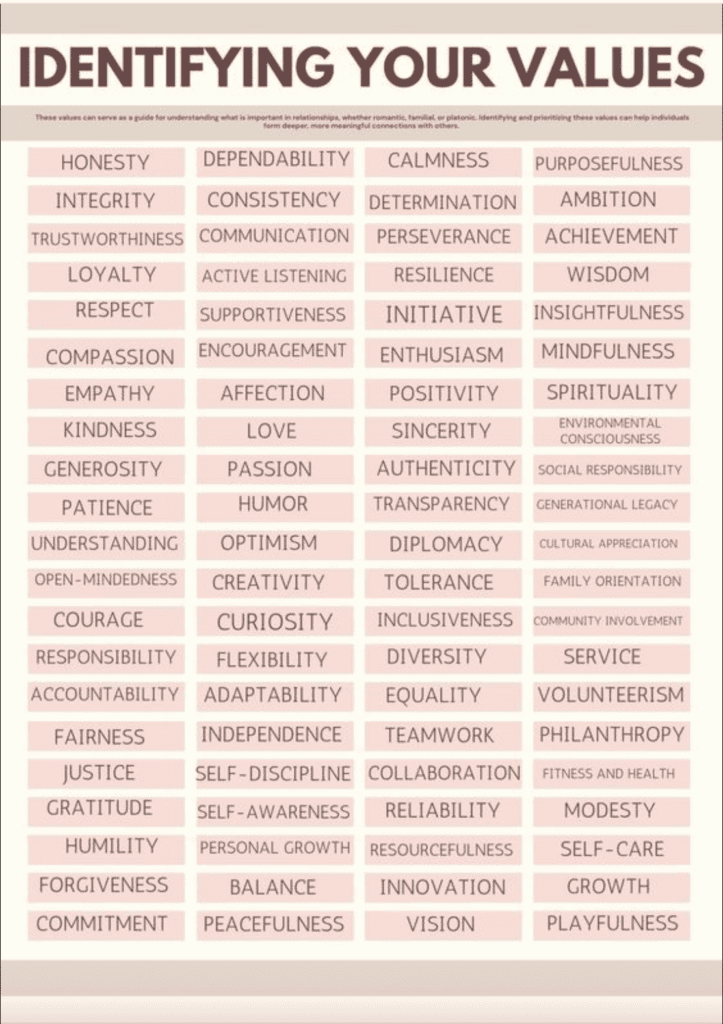
Now that you know what values are and are not, try to think of your own values. Here’s a helpful exercise that lists some example values (there are more that aren’t mentioned here) and helps you to pick what is important to you.

(https://www.think2perform.com/values/)

image

While these exercises are helpful and can provide you with a good starting point, there are many values that aren’t listed and may feel more aligned with you. Spend some time thinking about your values, answering presently and truthfully… really trying to know yourself more!

Ok so now you know your values! These are the key to helping foster meaning and fulfillment in our lives. The next question is: “Now that I know what’s important to me, what do I do with this information?” 

Stay tuned for Part Two of this post where we Go For It!

Staying Grounded in a Digital World

Social media is woven into our everyday lives. For many teens, young adults, and parents, scrolling has become a common way to relax, stay connected with others, and “catch up” on what’s happening in the world. While social media has its upsides, it can quietly affect our mental health in ways we may not notice. For example, you might find yourself feeling more self-conscious, distracted, restless, or less content after scrolling – subtle signs that your time online may be influencing your mood and overall well-being.

The good news? You don’t need to delete your social media to feel better! Making a few small tweaks in your online engagement can make a big difference in protecting your mental health. 

  1. Check in with yourself while you scroll 

Do you notice that some accounts leave you feeling inspired, while others leave you feeling anxious or drained? After spending time online, take a moment to check-in with your mind and body – how do you feel? Your emotional state after engaging with content can offer valuable insight into how your feed on social media is affecting your mental health.  

As you become more aware of how scrolling affects you, practice noticing it in real time. Social media activates reward pathways in the brain, which can make it difficult to stop scrolling even when it’s no longer enjoyable or starts to cause mental strain. To stay intentional, find ways to prompt yourself for brief “check-ins.” For example, try setting a 15-minute timer when you open an app. When it goes off, pause to notice how you feel: are you relaxed or drained? Are you scrolling on autopilot or consciously engaging with content that feels good for you? These mindful pauses can help you regain control, strengthen self-awareness, and use social media in ways that support your mental well-being. 

  1. Recognize the comparison trap

As humans, we are wired to compare ourselves – it’s part of how we make sense of the world around us. On social media, most people share their “highlights,” which rarely reflect their day-to-day reality. This can distort our perception, leading us to measure ourselves against carefully curated and filtered versions of other people’s lives. This comparison can trigger feelings of self-doubt, anxiety, or low mood. 

If you find yourself slipping into the comparison trap, consider taking a pause to remind yourself that social media is not real life – it’s a snapshot, not the full story. This simple pause can help you shift perspective, ground yourself, and reduce the emotional impact.  

  1. Reclaim your rest

Is scrolling your go-to during down time? Is it your last activity before bed? You’re not alone. Many people appreciate the mindless distraction of scrolling, but it often doesn’t restore the mind in the way that true rest does. In fact, late-night scrolling can disrupt sleep quality and make it harder to unwind. Try setting a “last scroll” time about 30-60 minutes before bed to give you brain space to settle. 

Instead of scrolling, choose a calming, repetitive activity that helps signal to your body that it’s time to rest. This might include coloring, knitting, reading, or taking a warm shower. These gentle, low-stimulation tasks place less strain on your brain and support the natural onset of sleep, helping you to wake-up feeling more rested and clear-headed. 

Social media isn’t inherently harmful – it’s an important tool in our everyday lives. The key to healthy online engagement is awareness. By noticing how social media affects your mood, challenging moments of comparison, and setting intentional boundaries around when you use it, you can cultivate a healthier relationship with social media. These small adjustments can protect your mental health and help you use technology in ways that support, rather than drain, your well-being.  

The Importance of Anger

When most people think of anger, they imagine outbursts, harsh words, or slammed doors. Anger is often treated as something to be controlled or avoided. But anger is not always the problem. More often, it is a signal. It is less about destruction and more about protection. Think of anger as the bouncer outside the nightclub of your emotions. The bouncer is not warm, gentle, or vulnerable. His job is to look tough, to keep trouble out, and to make sure no one gets too close to what is inside. Anger works in the same way. It stands guard, shielding the softer and more fragile feelings that live within us—hurt, fear, sadness, and grief. 

Anger as Protection

Anger often arrives quickly and forcefully, but rarely is it the whole story. Beneath anger, there is almost always something more tender. It might be the pain of feeling dismissed or unworthy, the fear of abandonment or failure, or the sorrow of losing something important. Showing those deeper feelings can leave us feeling exposed or unsafe. So anger steps forward. It says, “Stay away. You will not see what I am holding inside.” Anger does its job well, but when it is the only emotion we recognize, we risk losing touch with our true experience.

The Invitation Behind Anger

When anger shows up, it is not only there to defend. It is also there to invite us inward. If we can pause and ask ourselves, “What is my anger protecting?” we may find something essential waiting to be acknowledged. Sometimes anger is covering hurt, a wound to our dignity or our sense of belonging. Sometimes it shields fear, the sense that we may lose someone or something we depend on. Sometimes it guards grief, the quiet ache of loss that has not yet found its voice. By moving through anger and into the feelings it protects, we allow ourselves to respond with greater honesty, both to ourselves and to others.

Meeting Anger with Curiosity

The next time anger rises, try meeting it with curiosity rather than resistance. Notice its presence and even thank it for protecting you. Then gently ask yourself what lies beneath it. What softer emotion is the bouncer guarding? As you make space for the pain, fear, or grief that rests underneath, you begin to open the door to deeper self-understanding. Anger becomes less of an enemy and more of a guide, pointing you toward the emotions that most need your care.

Why This Matters

If anger is the only voice we express, our relationships often become strained and cycles of defensiveness grow stronger. But when we recognize anger as a protector of something more vulnerable, we gain the chance to meet ourselves and others with compassion. Anger is not the last word. It is the bouncer reminding us that something precious is inside. Something worth noticing. Something worth protecting. And most importantly, something worth feeling.

Diving Into Depression: The Role of Introjected Anger and Resentment

Depression is a complex mental health condition that affects millions worldwide. While often linked to biochemical imbalances, situational factors, and genetic predispositions, emotional experiences and internalized feelings also play a crucial role in its development. One such factor is the introjection of anger and resentment, which can significantly contribute to depressive symptoms.

What Is Introjection?

Introjection is a psychological defense mechanism where individuals unconsciously incorporate feelings, attitudes, or attributes of others into their own psyche. Essentially, it involves internalizing external emotions or criticisms, often as a way to cope or avoid conflict.

How Does Introjection of Anger and Resentment Manifest?

When someone experiences anger or resentment but suppresses these feelings (perhaps due to fear of confrontation, societal expectations, or personal beliefs) they may inadvertently turn these emotions inward. This internalization can lead to a host of emotional and physical symptoms characteristic of depression, including but not limited to:

Persistent sadness or emptiness

Loss of interest or pleasure

Fatigue and low energy

Feelings of worthlessness

Self-criticism and guilt

The Link Between Suppressed Anger and Depression

Anger and resentment are natural human emotions. When these feelings are invalidated or ignored, they don’t simply disappear; instead, they can be transformed into self-directed negativity. This internalized anger can erode self-esteem, foster feelings of helplessness, and perpetuate a cycle of negative thinking. These are all hallmark signs of depression and may be seen as medication-resistant. Essentially, anger turned inward becomes depression.

Research suggests that repressing anger may impair emotional regulation, making it more challenging to process other feelings healthily. Over time, this emotional bottleneck can manifest as depressive symptoms, as the individual feels overwhelmed by unresolved internal conflicts.

The Role of Resentment

Resentment often stems from perceived injustices or unmet needs. When these feelings are not acknowledged or expressed, they can fester within, contributing to bitterness and a sense of ongoing victimization. This internalized resentment fuels negative self-perceptions and hopelessness, further deepening depressive states.

Breaking the Cycle: Healing and Self-Compassion

Addressing depression related to introjected anger and resentment involves acknowledgment and expression of genuine emotions. Therapeutic approaches like talk therapy, especially modalities such as psychodynamic therapy, emotion-focused therapy (EFT), or cognitive-behavioral therapy (CBT), can help individuals:

Recognize suppressed feelings

Understand their origins

Develop healthier emotional expression strategies

Cultivate self-compassion and forgiveness

Mindfulness and emotional awareness practices can also help identify and release repressed emotions, creating space for healing and growth.

Conclusion

Depression is rarely caused by a single factor. The introjection of anger and resentment is a significant but often overlooked contributor to emotional suffering. By understanding and addressing these internalized emotions, individuals can begin to heal, regain their emotional well-being, and move toward a more authentic and fulfilling life.

If you or someone you know is struggling with depression, consider reaching out to a mental health professional who can provide guidance tailored to individual needs. Remember, though hard, acknowledging difficult feelings is a vital step toward recovery and emotional well-being.

Stop Tearing Down and Start Building:

5 Ways to Enrich your Relationship Today

Frustrated by the way your relationships are going? Feeling like you’re always at odds with someone at home or at work? Here are a handful of tips you can use to revitalize your relationships and improve your interactions with others.

1. Look for the positives and focus on the other person’s strengths. For example, you might start by noticing how well your spouse manages his or her job, commitments at home, balance between free time and family time, or anything else. As you observe him or her, begin commenting about what you’ve seen like this: “You do a really good job with __________” or “I’m impressed that you were able to accomplish _________ today.” Dr. John Gottman says the magic ratio is 5 positive interactions for every 1 that is negative. In order to compensate for the inevitable bumps along the way, make a concerted effort to recognize the positive qualities of those around you each and every day.

2. Employ active listening skills. Active listening initially includes paying attention, withholding judgment and reflecting the other person’s words by repeating them back to him or her. This is especially important—and challenging—when there is conflict. As you take the time to slow down and focus on your co-worker’s point of view, you may find yourself less focused on making your case and more willing to reach a mutually beneficial solution. If you want additional information on this topic, look here: https://www.ccl.org/multimedia/podcast/the-big-6-an-active-listening-skill-set/

3. Take care of yourself. As you are able, focus on eating well, getting enough sleep, drinking water throughout the day, exercising, and managing your stress. This will have a positive impact on yourself and everyone around you. If you need help remembering to do these things, enlist some support partners. You might also use an app like Wunderlist to organize your goals and set reminders.

4. Look for common interests and seek to engage in those whenever possible. When you think of your relationships, consider whether there are any favorite activities, interests, or even favorite foods that could bring you and the people you love together. For example, you might consider setting up weekly, bi-weekly or monthly dates to spend time with each of your children. Enlist their help to come up with ideas of things they’d like to do or explore with you, and work your way through the list you compose.

5. Before you speak, consider the things you often say. If you are frequently at odds with someone in your life, think about the phrases you find yourself repeating to that person. Perhaps you need to change what you are saying so your family member can really hear the message. For example, if you find that you are constantly telling your dad that he’s embarrassing you in some way, maybe you could tell him some things you appreciate about him (see #1) and then give him a few tips about what he could say or do when he’s around your friends.

These five tips may seem simple, but will require a concerted effort on your part. If it seems overwhelming to implement all five at once, start with the one that seems the most likely to create positive change and work your way through the rest as you are able. Though you may encounter resistance at first, you will soon notice small differences in the relational atmosphere. If you or someone in your life would benefit from the help of a psychologist as you work to improve your relationships, please call our office at 215.491.1119.

Showing Slide 1 of 7